0%

When cricketers ask, “What Is a Kashmir Willow Cricket Bat?”, they often expect a simple answer. It is a bat made from willow grown mainly in the Kashmir region of India. The timber is commonly valued for its strength, practical performance, and more accessible price than premium English willow.

Kashmir willow usually has a slightly heavier feel. Its grain can appear less regular, with visible knots, marks, or darker areas. That appearance does not automatically mean poor quality. A well-made Kashmir Willow Cricket Bat can offer reliable rebound, solid balance, and useful durability for club matches, practice sessions, and developing players. The bat’s pressing, moisture content, handle quality, and manufacturing standards matter greatly.

The clearest test is in your hands.

A bat should feel comfortable through the pickup and swing. Check whether the weight suits your timing, rather than trusting the printed number alone. Examine the toe, edges, splice, and face for cracks or loose areas. A reputable seller should describe the willow grade honestly and provide clear care instructions. Some bats require knocking in before serious use, even when advertised as ready to play.

That description is useful, but incomplete. Willow quality can vary between manufacturers, and two bats with similar labels may perform differently. A Kashmir Willow Cricket Bat is not automatically inferior; it simply reflects different timber characteristics and production choices. Players should consider budget, playing level, pitch conditions, and personal preference. A heavier bat may offer confidence, yet it can reduce control if the player cannot move it comfortably. Careful selection remains more important than marketing language.
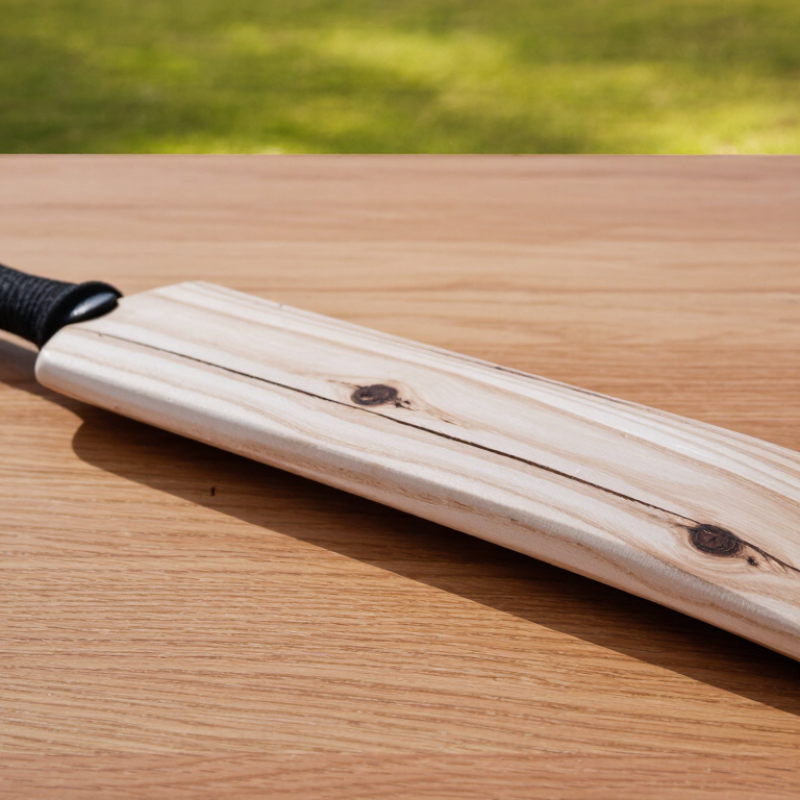
What Is a Kashmir Willow Cricket Bat?

Botanical Identity: How Salix alba Defines a Kashmir Willow Bat

A Kashmir willow cricket bat is commonly associated with Salix alba, the white willow species recorded by Kew’s Plants of the World Online. The name “Kashmir willow” describes regional cultivation and bat-making tradition, not a separate botanical species. That distinction matters. Salix alba can vary in growth rate, grain, density, and moisture content, even within nearby plantations. In practical bat inspection, I look for straight grains, clean shoulders, and a balanced pickup. These visible traits often matter more than a simple species label.

The USDA Forest Products Laboratory’s Wood Handbook, General Technical Report FPL-GTR-282, explains that wood density changes with moisture and specimen conditions. Therefore, fixed weight claims can mislead buyers. A dense blade may feel powerful, but excessive mass can slow a player’s hands. A lighter blade may offer quicker control, though it can feel less stable on mishits. The International Cricket Council’s equipment guidance and MCC Laws of Cricket, Law 5, set the governing bat limits: maximum length is 96.52 centimetres, width is 10.8 centimetres, and edge thickness is 4.0 centimetres. These measurements do not prove botanical identity. They only define acceptable equipment dimensions. Some sellers also use “Salix alba” too confidently, although cultivar and origin records may be incomplete. That is worth questioning. A reliable assessment should combine supplier traceability, moisture checks, grain inspection, and hands-on balance testing. The bat’s pale surface tells only part of the story.

Regional Timber: How Kashmir’s Climate Shapes Willow Growth and Grain

What Is a Kashmir Willow Cricket Bat?

A Kashmir willow cricket bat is made from willow grown in northern India’s Kashmir region. The area has cold winters, warm summers, and clear sunlight. These seasonal changes can slow the tree’s growth and influence its grain. Regular irrigation also matters, especially during dry periods. A well-grown cleft may show straight, even lines with moderate spacing. Its wood often feels slightly heavier than premium English willow. That extra density can provide a solid, dependable response for developing players. However, climate alone does not guarantee quality. Soil, tree age, harvesting time, and drying methods also shape the final bat. Two clefts from nearby fields may perform differently.

Tips: Check the grain from toe to shoulder. Look for clean edges and limited surface damage. Press the wood gently with your thumb. It should feel firm, not damp or unusually soft. Ask about moisture control before buying. Poor storage can distort even good willow.

Experienced bat makers inspect more than the number of grains. They consider weight distribution, cleft balance, and pressing quality. Kashmir’s climate creates useful timber, but every piece remains individual. I once assumed wider grain meant weaker wood; that view was too simple. Grain width can offer clues, not a complete verdict. A carefully prepared Kashmir willow bat may suit players who value durability, controlled weight, and a steady feel during practice or competitive play.

Industry Grading: What 2.7–3.0 lb Weights Say About Pickup and Balance

A Kashmir willow cricket bat is made from willow grown in the Kashmir region and selected for practical match use. Its grain can look less regular than premium English willow. That does not automatically mean poor performance. Experienced batters often value its solid feel, predictable price, and durable lower profile. The pressing quality still matters greatly. A well-shaped blade can outperform a poorly prepared bat with better-looking grains.

Industry grading often places bats between 2.7 and 3.0 pounds. This range says something about mass, but not everything about pickup. A 2.7-pound bat usually feels quicker through the drive. A 3.0-pound bat may offer stronger momentum against fast bowling. However, the balance point can change that experience. A long blade, thick toe, or heavy edge may make a lighter bat feel demanding. During testing, hold the bat with one hand and shadow-drive it. Notice whether the head drops naturally.

Weight labels are useful, yet they should not replace direct handling. Two bats with identical scales can feel completely different because their mass sits in different areas. Handle thickness, splice construction, and shoulder shape also influence control. I have sometimes preferred a heavier bat after several minutes of practice, then disliked it during a full innings. That small contradiction matters. Pickup depends on your technique, strength, and preferred shots, not only on the printed number. Grading terms may also vary between makers, so ask how the weight was measured.

Bat Performance: How Willow Density Influences Rebound and Durability

What Is a Kashmir Willow Cricket Bat?

Bat Performance: How Willow Density Influences Rebound and Durability

A Kashmir willow cricket bat is made from willow grown in the Kashmir region. Its performance depends heavily on wood density, moisture, grain structure, and pressing quality. Denser willow usually feels firmer in the hands. It can produce a controlled rebound when the ball strikes the middle. However, density alone does not guarantee a powerful bat.

In practical use, a denser blade often resists small dents from repeated net sessions. It may also tolerate mistimed shots better. The trade-off can be noticeable. A very dense bat may feel heavier and less responsive during quick strokes. Lower-density willow can feel livelier and easier to swing, but its edges may mark sooner. Kashmir willow commonly offers dependable durability at a practical price, although individual bats vary considerably.

A simple test helps. Tap the blade gently with a cricket ball and listen for a clear, even response. Then inspect the grains, toe, and handle alignment. I once focused too much on grain appearance and ignored the bat’s balance. That was a mistake. A beautifully marked blade can still feel slow through the shot. Keep the bat dry, use suitable protective facing, and avoid hard balls before proper preparation. These details matter. Density is only one part of performance.

MCC Law 5: How the 38-Inch Length and 4.25-Inch Width Apply

A Kashmir willow cricket bat is defined by its wood, not by a separate legal size category. Its playing dimensions follow MCC Law 5. The 2022 Laws specify a maximum overall length of 38 inches, or 96.52 centimetres, including the handle. The blade width cannot exceed 4.25 inches, equal to 10.8 centimetres (MCC, Laws of Cricket 2022, Law 5.7). ICC playing conditions repeat these measurements for regulated matches (ICC, Men’s Test Match Playing Conditions, 2024).

Measure it cold. Place the bat on a flat surface, then check from the handle’s top to the toe. Width should be measured across the widest blade section, not across a raised spine or protective covering. In practical inspection, a Kashmir willow bat may look narrower because its shoulders taper sharply. That appearance does not change the limit.

A thick edge can also create visual confusion; width and thickness are separate measurements. Small details matter.

A useful workshop check is a rigid ruler, followed by calipers around the blade. Hand measurements can be imperfect. Grips compress, stickers add layers, and moisture may slightly change wood dimensions. MCC Law 5 also lists maximum blade thickness and edge limits, so passing the length and width tests alone is not enough. I would record the readings before applying oil or protective film. That habit is simple, but often missed.

FAQS

Is Kashmir willow a separate tree species?

No. “Kashmir willow” usually describes regional cultivation and bat-making traditions. It is commonly associated with Salix alba. Supplier records may still be incomplete.

What should I inspect on a Kashmir willow bat?

Check straight grains, clean shoulders, and balanced pickup. Look closely at the toe and blade surface. A species label alone proves very little.

Does the bat’s weight stay constant?

Not completely. Wood density changes with moisture and testing conditions. A heavier bat may feel powerful but slow your hands. A lighter bat can offer quicker control. It may feel unstable during mishits.

What does balanced pickup mean?

It describes how the bat feels while lifting and swinging it. A balanced bat should not feel excessively heavy at the blade. Hold it briefly. Then make several controlled practice swings.

What is the maximum bat length?

The maximum overall length is 96.52 centimetres, including the handle. Measure from the handle’s top to the toe. Place the bat on a flat surface.

What is the maximum blade width?

The blade cannot exceed 10.8 centimetres in width. Measure across the widest blade section. Do not measure across a raised spine or covering.

Are length and width measurements enough?

No. Thickness and edge limits also matter. A thick edge can create visual confusion. Measure with calipers where possible. Small details matter.

When should I measure the bat?

Measure it before adding oil, film, or extra coverings. Stickers and grips can affect readings. Moisture may also change dimensions slightly. My own hand measurements are not always perfect. Recheck them.

Conclusion

A Kashmir Willow Cricket Bat is made from Salix alba, a white willow species cultivated in the Kashmir region and valued for its practical balance of strength, flexibility, and affordability. Kashmir’s cool climate, seasonal water supply, and growing conditions influence the speed of tree development, grain structure, and timber density. These regional characteristics can create visible differences in grain straightness, cleft appearance, and overall bat quality.

In industry grading, bats weighing approximately 2.7–3.0 pounds are often assessed for how their willow density affects pickup, balance, rebound, and durability. Denser wood may offer solid impact resistance, while lighter willow can feel quicker through the shot, depending on its balance and shaping. Performance therefore depends on more than weight alone. Under MCC Law 5, a legal bat may be no longer than 38 inches and no wider than 4.25 inches, making these dimensions important when designing a Kashmir willow bat for regulated cricket.


Elowen

Elowen

Elowen is a dedicated marketing professional with a strong understanding of product strategy, customer needs, and digital communication. As a valued member of the company, Elowen combines market insight with practical product knowledge to create clear, useful, and engaging content for the company’s......
Chat with us