0%

Finding a reliable China top custom satin boxing shorts manufacturer requires more than comparing prices. Custom Satin Boxing Shorts must combine visual appeal, comfort, durability, and accurate production. Satin should feel smooth against the skin. It should also resist premature tearing during training and competition.

An experienced manufacturer normally discusses fabric weight, lining options, waistband width, drawcord strength, stitching density, and logo placement. These details affect movement and long-term wear. A practical supplier can provide samples before bulk production. The sample should be checked under bright light. Inspect the seams, hems, embroidery, print clarity, and color consistency. Small flaws often become expensive at scale.

Communication also matters. Clear size charts, production timelines, packaging details, and inspection records improve reliability. Responsible manufacturers should support materials that meet applicable safety and labeling requirements. They should also respect intellectual property and avoid unauthorized brand designs. Factory photographs can help, but independent verification is better. Do not rely on attractive claims alone.

Quality is never automatic.

Some buyers focus heavily on appearance and overlook the waistband. That mistake can affect comfort quickly. Others select the lowest quotation, then discover hidden costs for sampling, revisions, or shipping. A better evaluation considers workmanship, response speed, production capacity, and after-sales support together. Even a capable factory may make an occasional error. The important question is how openly it identifies, corrects, and prevents that problem. This guide explores the practical standards that can help buyers choose a dependable Chinese Custom Satin Boxing Shorts manufacturer.
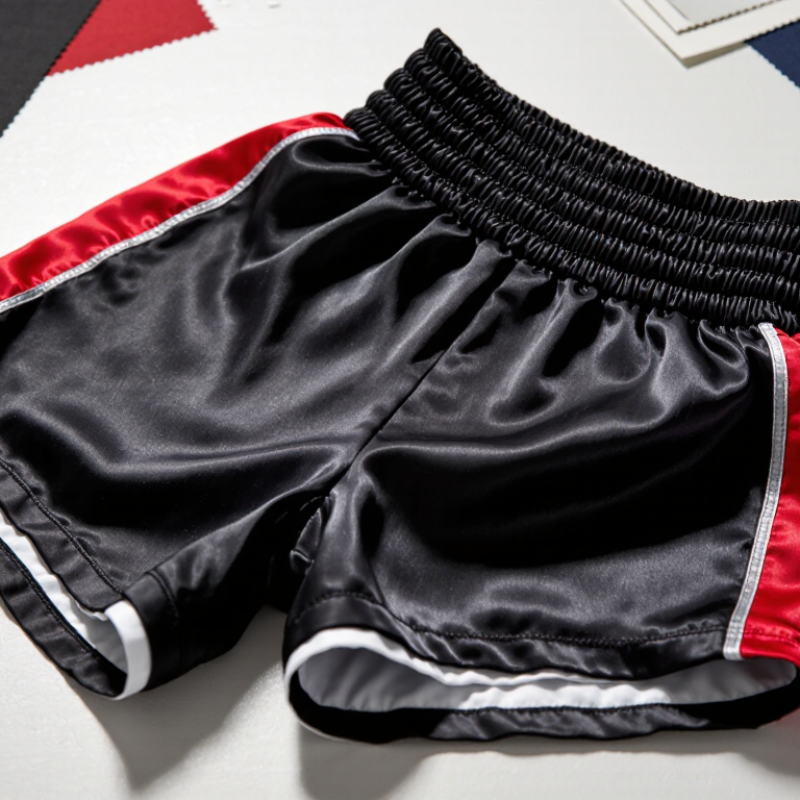
China Top Custom Satin Boxing Shorts Manufacturer?

What Makes China a Leading Custom Satin Boxing Shorts Manufacturer?

What Makes China a Leading Custom Satin Boxing Shorts Manufacturer?

China has become a leading custom satin boxing shorts manufacturer through mature textile production and flexible customization. Experienced factories can develop shorts for training, competition, events, and team programs. They usually offer choices in satin weight, waistband height, piping, lining, and print placement.

Satin is not forgiving. Small sewing errors can show clearly under bright lights. Skilled technicians check the fabric surface, stitch tension, leg opening, and waistband recovery before bulk production. Digital samples also help buyers review colors, artwork, measurements, and logo positioning. This process reduces surprises, although sample colors may still vary slightly between screens and fabric batches.

Reliable manufacturing depends on more than low pricing. A professional supplier should provide clear specifications, realistic sampling times, and documented quality checks. Measurements must be confirmed carefully, especially for athletes who need free movement around the hips and thighs. Some factories also inspect loose threads, uneven hems, and print adhesion before packing. No factory is flawless. Communication can still fail when instructions are vague or translated poorly. Buyers should request a physical sample and approve every detail in writing. Responsible production should also follow applicable labor, product safety, and trade requirements.

China is a leading destination for custom satin boxing shorts because manufacturers commonly combine flexible customization, established textile supply chains, scalable production capacity, competitive labor costs, and export experience. These industry-level scores represent relative manufacturing strengths rather than data from any individual company or brand.

Key Features of High-Quality Satin Boxing Shorts

High-quality satin boxing shorts begin with the fabric, not the artwork. Satin is a weave, so fiber choice matters. Polyester satin offers strong color clarity, quick drying, and a smooth surface. Textile Exchange’s 2024 Materials Market Report states that polyester represented about 59% of global fiber production in 2023. That scale supports stable sourcing, but it does not guarantee quality. Check fabric weight, usually 120–180 gsm for boxing shorts, before approving samples. Very light satin may tear near the side split.

A reliable custom manufacturer should control stitching, fit, and movement. Look for reinforced crotch seams, clean waist elastic, and a drawcord that stays flat during footwork. A 5–7 cm side opening can improve leg mobility. Colorfastness testing should follow methods such as ISO 105-C06 or AATCC TM61. These tests do not replace real training trials. Sweat, repeated washing, and sharp movement expose weak construction quickly. I have seen attractive samples fail because the waistband twisted after several washes. That detail is easy to miss.

Tips: Request a pre-production sample. Stretch it, wash it, and inspect the seams. Rub the satin against a white cloth. Ask for fabric composition, gsm, shrinkage, and test records. Do not judge softness alone. A slightly less glossy fabric may perform better under bright lights and repeated use.

How Custom Boxing Shorts Are Designed and Produced

Designing custom satin boxing shorts begins with movement, not decoration. A fighter’s waist, hip, rise, and preferred length guide the first pattern. The shorts must allow high kicks, quick footwork, and deep bends without pulling at the seams. Satin weight also matters. Lightweight fabric feels fast, while heavier satin creates a stronger drape. Fit is never perfect on paper. A real sample reveals more.

The production team converts measurements and artwork into a clear technical file.

It records fabric width, color references, seam allowance, waistband height, and drawcord placement. Pattern pieces are checked before cutting to reduce waste and prevent uneven panels. Skilled operators sew the outer seams, attach the waistband, and reinforce stress points around the crotch and side splits. The split opening needs careful control. A few millimeters can change movement.

Each finished pair should receive visual and practical inspection.

Staff check loose threads, stitching density, color consistency, waistband recovery, and print alignment. They also stretch the shorts repeatedly and examine the seams afterward. Early samples sometimes show twisted waistbands or uncomfortable inner edges. That is not a success, but it is useful evidence. Adjustments may involve a softer elastic, a wider side split, or a revised rise. Reliable production depends on recording these changes and confirming them before bulk manufacturing.

Choosing the Right Chinese Manufacturer for Your Brand

Choosing the Right Chinese Manufacturer for Your Brand

Choosing a Chinese manufacturer for custom satin boxing shorts requires more than comparing prices. Check fabric samples, stitching, waistband recovery, and color consistency before discussing large orders. Satin should feel smooth, but it must also survive repeated movement and washing. Request a sample pair with your exact logo placement, hem width, drawcord length, and size measurements.

The Textile Exchange Materials Market Report 2024 reported global fiber production at about 124 million tonnes in 2023. Polyester represented roughly 57% of that volume. This matters because satin blends can vary greatly in strength, shine, and breathability. Ask the factory for fiber composition, fabric weight, shrinkage results, and colorfastness records. A reliable supplier should explain testing methods, not simply send attractive photos. Photos can hide uneven seams.

Production controls deserve close attention. Confirm the factory’s monthly capacity, sample approval process, inspection points, and correction policy. The International Trade Centre highlights trade data as a practical tool for assessing supplier markets and export performance. Use it alongside factory audits and independent inspections. A cheap quote may exclude packaging, revisions, or failed samples. That is where budgets quietly break. Do not assume a large factory is automatically better. Smaller workshops may offer careful customization, but their backup capacity can be weak. I would document every measurement and approval, because memory is not a quality system.

China Top Custom Satin Boxing Shorts Manufacturer? - Choosing the Right Chinese Manufacturer for Your Brand

Evaluation Dimension Practical Requirement Common Industry Reference What to Verify Before Ordering
Fabric Composition Lightweight satin with a smooth surface and sufficient tear resistance Common options include 100% polyester satin or polyester blends; exact weight varies by construction Request a fabric swatch, fiber composition, weight, colorfastness, and shrinkage information
Shorts Construction Loose athletic fit, reinforced seams, functional waistband, and comfortable lining or inner brief where required Typical details include an elastic waistband, drawcord, side splits, and double-needle or overlock stitching Review a physical sample for seam strength, waistband recovery, drawcord security, and movement comfort
Decoration Method Decoration should match the satin surface, artwork size, order quantity, and expected wash or wear conditions Common methods include screen printing, heat transfer, embroidery, and sublimation on suitable polyester fabric Confirm artwork format, print position, color count, decoration durability, and approval sample requirements
Sizing and Grading A size chart should be based on the target market and include garment measurements with clear tolerances Adult size systems commonly range from smaller to extended sizes, but measurements differ between markets Approve a measurement chart, grading rules, tolerance range, and pre-production size set
Minimum Order Quantity The MOQ should fit the brand’s launch budget, color assortment, and inventory plan MOQ is factory-specific and may vary by color, fabric, decoration method, and custom packaging Obtain written MOQ terms for each color, size mix, artwork, and packaging configuration
Sampling Process The supplier should provide a development sample before bulk production A reliable process normally includes design review, quotation, prototype, revisions, and pre-production approval Clarify sample fees, revision limits, sample timing, shipping responsibility, and approval records
Production Timeline The schedule should include material sourcing, sampling, bulk production, inspection, and shipping Lead times are not fixed; they depend on fabric availability, order complexity, season, and factory capacity Request a dated production calendar and confirm how delays, changes, and approvals are managed
Quality Control Inspection should cover measurements, fabric defects, stitching, decoration, color, labels, and packaging AQL-based inspection is commonly used for apparel quality sampling, subject to an agreed inspection plan Agree on inspection standards, defect classifications, tolerance limits, corrective actions, and inspection timing
Compliance Documentation Documentation should match the destination market and the product’s fiber, labeling, and chemical requirements Depending on the market, buyers may request fiber-content records, care-label information, restricted-substance testing, or social-audit documentation Verify document validity, testing scope, issuing laboratory, production site, and product-to-report consistency
Packaging and Labeling Packaging should protect satin fabric and present accurate product, size, care, and origin information Common options include folding, polybags, size stickers, woven or printed labels, hangtags, and export cartons Approve label artwork, carton dimensions, packing ratio, barcode requirements, and packaging materials
Commercial and Logistics Terms The quotation should clearly separate product, decoration, sampling, packaging, inspection, and freight costs International apparel orders may use trade terms such as EXW, FOB, or other agreed delivery arrangements Confirm payment schedule, currency, shipping term, export documents, carton details, and responsibility for customs clearance

Note: Specifications, quantities, lead times, testing requirements, and costs vary by product design, order volume, destination market, and production capacity. Obtain written quotations and approved samples before placing a bulk order.

Quality Control, Pricing, and Global Shipping Considerations

China Top Custom Satin Boxing Shorts Manufacturer?

A reliable manufacturer should show how satin shorts are checked, not only display polished photos. Request a pre-production sample with your exact fabric, waistband, trim, embroidery, and size chart. Inspect seam strength, stitching density, color consistency, and loose threads. Satin can snag easily, so rubbing tests and wash tests matter. Details matter. Ask for inspection records, defect limits, and corrective-action reports. A factory that explains failures honestly may be more dependable than one promising zero defects.

Pricing depends on fabric weight, pattern complexity, order volume, packaging, and customization. Request a detailed quotation instead of accepting one total figure. Confirm whether sampling, mold fees, labels, inspection, and revisions are included. Low prices can hide weaker satin or rushed sewing. Global shipping adds freight, insurance, customs duties, and possible storage charges. Clarify the Incoterm, production lead time, carton dimensions, and destination documents. Check the correct HS code with a qualified customs professional. Small errors can delay delivery.

Tips: Approve a sealed reference sample before bulk production. Measure several finished pieces, not just one. Leave time for inspection and transport delays. I have found that buyers often underestimate carton volume; this mistake can change freight costs sharply. Also, color may vary between digital images and physical satin. Request lab dips or fabric swatches. A written quality agreement feels slower, but it prevents uncomfortable arguments later.

FAQS

Why is China a strong source for custom satin boxing shorts?

China has mature textile production and flexible customization. Factories can adjust satin weight, waistbands, piping, lining, and print placement. Production options are broad. Quality still depends on clear instructions and careful checks.

What should buyers inspect before placing a large order?

Request fabric samples and one physical sample pair. Check stitching, leg openings, waistband recovery, and seam alignment. Bright lights expose small satin defects. Photos are not enough.

Which fabric details should a buyer confirm?

Ask for fiber composition, fabric weight, shrinkage results, and colorfastness records. Satin blends can differ in shine, strength, and breathability. A smooth surface does not guarantee durability. That assumption can be costly.

Why are measurements important for these shorts?

Athletes need free movement around the hips and thighs. Confirm waist size, rise, inseam, hem width, and drawcord length. Test movement in the sample. A perfect-looking pair may still feel restrictive.

How can digital samples reduce production mistakes?

Digital samples show colors, artwork, measurements, and logo placement. They help buyers review details before cutting fabric. Screen colors may differ slightly from physical fabric. Approve the physical sample in writing.

What quality checks should a factory complete?

Inspect stitch tension, loose threads, uneven hems, and print adhesion. Check waistband recovery after stretching. Review the satin surface under bright light. Small faults become obvious there.

Should buyers choose the cheapest quotation?

Not automatically. Low prices may exclude packaging, revisions, or failed samples. Ask for a complete cost breakdown. Cheap can become expensive quietly.

Can smaller workshops be suitable suppliers?

Smaller workshops may provide careful customization and direct communication. Their backup capacity may be limited during busy periods. Confirm monthly output and emergency plans. Do not assume size equals quality.

How can buyers reduce communication problems?

Record every measurement, material detail, and approval. Use marked drawings for hem width and print position. Avoid vague translations. Memory is not a quality system.

Conclusion

China has become a leading destination for Custom Satin Boxing Shorts because its manufacturers combine experienced garment production, flexible customization, efficient supply chains, and competitive pricing. They can support different satin fabrics, colors, patterns, waistbands, inseam lengths, embroidery, printing, and packaging options to meet the needs of sportswear retailers, training organizations, and private-label businesses. High-quality shorts should provide a smooth finish, comfortable fit, durable stitching, secure waist construction, breathable design, and colorfast decoration suitable for repeated use.

The design and production process typically includes concept development, fabric selection, digital artwork approval, sample making, size confirmation, bulk manufacturing, and final inspection. When choosing a Chinese manufacturer, buyers should evaluate communication, customization capabilities, production capacity, certifications, sample quality, and delivery reliability. Clear quality standards and pre-production approval help reduce errors. Buyers should also compare pricing based on fabric, decoration, order quantity, and packaging while confirming payment terms, lead times, export documentation, and global shipping arrangements before placing an order.


Elowen

Elowen

Elowen is a dedicated marketing professional with a strong understanding of product strategy, customer needs, and digital communication. As a valued member of the company, Elowen combines market insight with practical product knowledge to create clear, useful, and engaging content for the company’s......
Chat with us