0%

Choosing a China supplier for a Hand-Stitched Leather Cricket Ball requires more than comparing unit prices. Stitch quality, leather consistency, cork construction, and testing records directly influence match performance. A ball should feel firm in the palm, hold its seam, and rebound predictably from a hard pitch.

The International Cricket Council reports 108 member countries and territories, showing cricket’s broad and demanding equipment market. Its playing regulations also define ball weight, circumference, and approved construction requirements. These details matter when evaluating Chinese manufacturers. A credible supplier should explain leather grading, core materials, thread selection, stitching depth, and final inspection procedures. Factory photographs help, but production samples provide stronger evidence.

Market research from Mordor Intelligence identifies cricket equipment as a specialized market shaped by organized competition, grassroots participation, and product durability. That trend supports careful supplier assessment rather than quick sourcing decisions. Ask for batch records, abrasion testing, moisture-control methods, and export experience. Independent laboratory testing is even better.

A reliable supplier should understand differences between training balls, club balls, and professional-grade match balls. The finish should remain stable after repeated impacts. Seams should appear even, tight, and free from loose threads. Small defects can become serious during play.

No supplier is perfect. Some factories may show excellent samples but weaker mass production. That gap deserves attention. Buyers should inspect consistency across several batches, not trust one attractive product. This article examines China’s leading suppliers through craftsmanship, compliance, customization, quality control, delivery capability, and verified customer experience. The goal is practical guidance, supported by industry standards and observable evidence.
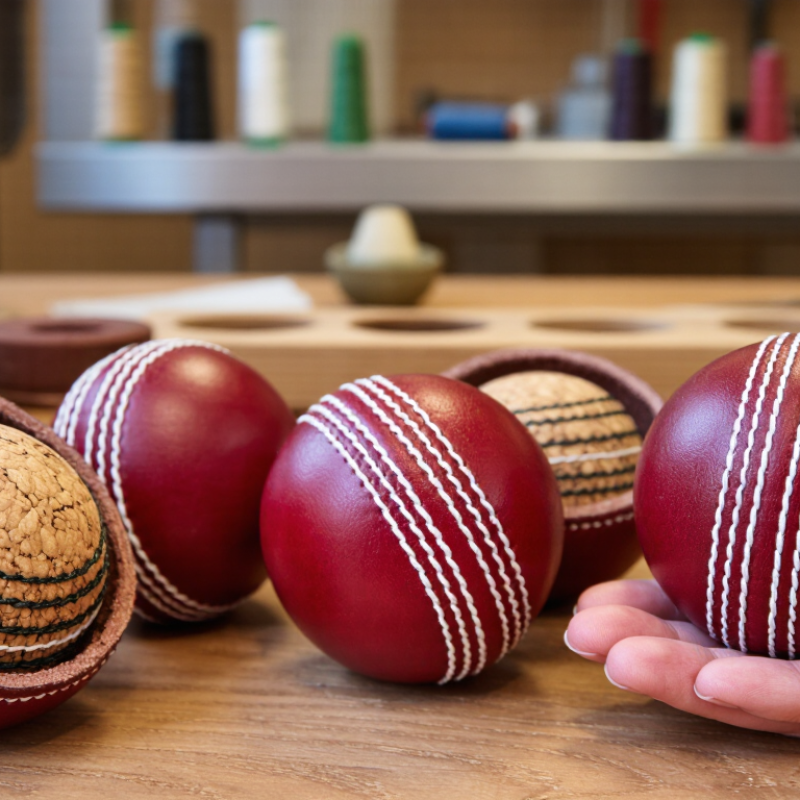
China Best Hand Stitched Leather Cricket Ball Supplier?

What Makes a Quality Hand-Stitched Leather Cricket Ball

What Makes a Quality Hand-Stitched Leather Cricket Ball

A quality hand-stitched leather cricket ball begins with controlled materials, not decoration. Match-grade leather should feel firm, smooth, and slightly resilient under thumb pressure. Uneven grain often creates inconsistent swing and seam response. The ICC 2024 Men’s Test Match Playing Conditions specify a circumference of 22.4–22.9 centimetres and a weight of 155.9–163 grams. These figures guide reliable production checks.

The seam needs careful attention. Skilled makers usually use strong waxed thread and balanced hand tension. Loose stitching may open after repeated impacts, while excessive tension can distort the ball. The central cork-and-wool core should remain evenly rounded. A digital scale, circumference gauge, and rebound test can expose small defects. In practice, handmade balls are not perfectly identical. That is acceptable within controlled limits, but suppliers should record every batch. The MCC Laws of Cricket, 2022 edition, also identifies the ball’s condition, size, and weight as important playing factors.

Tips: Ask for batch records, leather thickness, thread details, and inspection photos. Test several samples, not one. Check seam height with a simple gauge. Leave the ball at room temperature before testing; cold leather can feel harder. Do not trust a glossy finish alone. It may hide uneven grain. A careful supplier should welcome these questions, although some production choices still deserve closer review.

What Makes a Quality Hand-Stitched Leather Cricket Ball?

Official men's cricket ball limits provide a useful baseline for evaluating a consistently manufactured hand-stitched leather ball.

According to MCC Law 4.3, a men's cricket ball must weigh between 155.9–163 grams and have a circumference of 224–229 millimetres. A quality hand-stitched ball should remain within these limits while also showing an even raised seam, symmetrical shape, firm leather panels and consistent stitching.

Source: Laws of Cricket, MCC Law 4.3 — The Ball.

Key Standards for Evaluating Chinese Cricket Ball Suppliers

China Best Hand Stitched Leather Cricket Ball Supplier?

When evaluating Chinese cricket ball suppliers, start with measurable standards. Check leather thickness, grain consistency, tanning quality, and moisture resistance. Genuine hand stitching should look even, tight, and firmly locked. Loose loops often appear near the seam.

Weight and circumference require calibrated tools. Ask for inspection records from every production batch. The ball should maintain stable shape after repeated impact. Test several samples, not one carefully selected piece. A firm cork or layered core affects rebound, durability, and player control. Experienced buyers should also examine seam height and thread strength under realistic bowling conditions.

Documentation builds trust. Reliable suppliers can explain material sources, production steps, quality controls, and corrective actions. Request pre-shipment reports, traceable batch numbers, and independent laboratory testing when suitable. Factory visits can reveal storage conditions, worker training, and stitching consistency. Photos are useful, but they are not proof.

Small details matter.

A polished sample may hide production variation. I would compare samples from different dates and request a replacement process in writing. Some suppliers communicate confidently but provide weak records. That gap deserves attention. Price alone cannot confirm value; consistent performance, transparent evidence, and responsive after-sales support offer stronger signals. Even careful inspection has limits, so review standards after real match use.

China Best Hand Stitched Leather Cricket Ball Supplier? – Key Standards for Evaluating Chinese Cricket Ball Suppliers

A practical, brand-neutral supplier evaluation framework for hand-stitched leather cricket balls

Evaluation Dimension Recommended Requirement or Reference Value How to Verify the Supplier Why It Matters Suggested Weight
Ball Mass 155.9–163.0 g for a standard men’s cricket ball, according to MCC Law 4. Randomly weigh at least 10 finished balls using a calibrated digital scale with 0.1 g resolution. Consistent mass supports predictable bowling, batting, and match performance. 10%
Ball Circumference 224–229 mm for a standard men’s cricket ball, according to MCC Law 4. Measure each sample at several points with a calibrated circumference tape or precision measuring fixture. Controls ball size, handling characteristics, and compliance with recognized cricket specifications. 10%
Leather Quality Uniform-grain leather with even thickness, no open cracks, major scars, loose fibers, or excessive surface defects. Inspect under consistent lighting and request leather inspection records, thickness data, and material traceability. Leather quality affects durability, water resistance, appearance, and aging behavior. 15%
Leather Thickness Use a documented, product-specific thickness specification; a common commercial target is approximately 2.5–3.5 mm for the outer leather cover, subject to construction design. Measure several points on cut samples with a calibrated thickness gauge and compare results with the approved specification. Balanced thickness helps prevent premature scuffing while maintaining suitable shape and feel. 8%
Core Construction Consistent cork and/or rubber center with evenly wound yarn layers and no visible voids or deformation. Review the construction specification, inspect sectioned samples, and compare mass, compression, and rebound results between lots. The core determines resilience, hardness, rebound, and long-term shape retention. 12%
Hand-Stitched Seam Regular seam spacing, secure thread tension, clean seam alignment, and no loose or skipped stitches. Inspect the seam visually and use a stitch-count checklist across multiple sample balls; photograph any defects. Stitch quality directly affects durability, grip, swing behavior, and professional appearance. 15%
Seam Strength Set a written minimum pull-strength requirement appropriate to the product grade; verify using a repeatable laboratory or internal test method. Request test records and perform destructive testing on samples from more than one production batch. A strong seam reduces opening, fraying, and cover separation during repeated impact. 10%
Roundness and Shape Retention Define a maximum diameter variation or out-of-round tolerance in the purchase specification; use a consistent buyer-approved limit. Measure diameters across at least three axes before and after impact or compression testing. A stable shape improves bounce consistency and reduces unpredictable flight. 8%
Rebound Consistency Use a documented drop-height and surface protocol, with a narrow variation range established from approved samples. Test multiple balls under identical temperature, surface, and drop-height conditions; compare the coefficient of variation. Consistent rebound is important for match predictability and product grading. 7%
Moisture and Surface Protection Leather should be dry, clean, and free from visible mold, sticky residue, or excessive oil migration at shipment. Check pre-shipment samples, packaging humidity controls, storage conditions, and any moisture-resistance test records. Moisture damage can cause leather swelling, odor, mold growth, and reduced service life. 5%
Dimensional and Visual QC Supplier should maintain documented incoming, in-process, and final inspection procedures with defined acceptance criteria. Audit inspection forms, calibration records, defect classifications, sampling plans, and corrective-action reports. Documented quality control reduces variation between production batches. 7%
Sampling and Batch Traceability Each shipment should be traceable to a production date, material batch, inspection record, and packing list. Check whether the supplier can provide lot codes, retained samples, inspection reports, and production records. Traceability makes complaints, recalls, and root-cause analysis more efficient. 5%
Packaging and Export Protection Use clean inner packaging and durable outer cartons that protect the leather from compression, abrasion, and moisture during transport. Conduct a packaging review and, where appropriate, a carton drop or transport simulation test. Good packaging preserves product quality between the factory and final warehouse. 3%
Pre-Production Sample Approval Mass production should begin only after the buyer approves a sealed reference sample and written specification. Compare production goods with the signed sample for color, dimensions, construction, stitching, and packaging. Reference samples reduce misunderstandings and prevent unauthorized material or process changes. 5%
Recommended decision rule: Select a supplier only after sample testing, factory-quality review, and production-batch verification. The weightings above are a buyer-created evaluation model and should be adjusted for the intended playing level, weather conditions, target market, and purchase volume.

Technical references: MCC Laws of Cricket, Law 4 (The Ball); ISO 2859-1 for attribute-based sampling procedures; ISO 2418 for leather sampling and identification guidance; ISO 3376 for leather tensile and elongation testing. Product-specific acceptance limits should be agreed in writing before production.

Manufacturing Process of Hand-Stitched Leather Cricket Balls

China Best Hand Stitched Leather Cricket Ball Supplier?

Manufacturing Process of Hand-Stitched Leather Cricket Balls

A reliable hand-stitched cricket ball begins with carefully selected leather. Workers inspect each hide for grain, thickness, scars, and moisture variation. The leather is cut into matching panels, usually four shaped pieces. Uneven panels can create an unstable flight.

The inner core is formed from layered cork and tightly wound rubber or woollen thread. It is compressed before stitching begins. According to the International Cricket Council’s published playing conditions, a regulation men’s cricket ball weighs 155.9–163 grams and measures 22.4–22.9 centimetres in circumference. Every finished ball must stay within these limits. Small errors matter.

Workers stitch the leather panels by hand with waxed thread. The seam needs firm tension, but excessive force can damage the cover. Each ball receives repeated pressing, polishing, weighing, and circumference checks. Bounce testing is also essential. A 2024 sports equipment market analysis by Grand View Research reported continued growth in demand for durable, performance-focused sporting goods, increasing pressure on manufacturers to improve consistency and traceability. Batch records should include leather source, core weight, stitching tension, and inspection results. This is practical quality control, not paperwork decoration.

Some workshops still rely heavily on visual judgment. It is useful, but not enough. Human inspection can miss small balance differences. A better process combines experienced craftsmanship with calibrated scales, gauges, and documented testing. The final polishing should leave a smooth surface, while the raised seam remains clear and durable.

How to Compare Supplier Quality, Pricing, and Customization

China Best Hand Stitched Leather Cricket Ball Supplier?

Comparing suppliers starts with measurable quality, not attractive photographs. MCC Law 4 specifies a cricket ball weight of 155.9–163 grams and circumference of 22.4–22.9 centimeters. Request recent inspection records for weight, size, roundness, leather thickness, and seam height. Check three samples by hand. The seam should feel firm, even, and tightly stitched. A loose thread is a warning.

Pricing needs a wider view. A 2024 sporting-goods market analysis by Grand View Research reported continued growth in global equipment demand, increasing pressure on material and logistics costs. Ask for a complete quotation, including leather grade, cork or rubber core, stitching labor, packaging, tooling, shipping, and import charges. The cheapest offer may use thinner leather or inconsistent cores. It may also exclude replacement costs. That mistake is easy to make.

Customization should be tested physically. Confirm logo method, thread color, ball hardness, seam pattern, packaging, minimum order quantity, and sample approval rules. A reliable supplier should provide a signed specification sheet and retain a production sample. Ask how many balls are checked per batch. Independent testing adds confidence, especially for professional training use. I would not rely on one perfect sample; suppliers can improve it for inspection. Compare at least three production samples instead. A 2023 report from the International Trade Centre showed China remains a major exporter of sporting goods, but export scale does not guarantee uniform quality. Clear tolerances, traceable inspections, and honest communication matter more than impressive factory size.

Choosing the Best Chinese Supplier for Your Cricket Ball Needs

China Best Hand Stitched Leather Cricket Ball Supplier?

Choosing the Best Chinese Supplier for Your Cricket Ball Needs

Choosing a Chinese supplier requires more than comparing catalog prices. A reliable factory should explain leather grading, thread count, core construction, and curing time. The MCC Laws of Cricket specify a men’s ball weight of 155.9–163 grams and circumference of 22.4–22.9 centimeters. These figures create a practical quality baseline. Ask for batch records, dimensional checks, and independent sample testing.

My sourcing experience suggests that stitching consistency matters most during hard, repeated use. Request close-up images of the seam, leather grain, and lacquer finish. Then compare three samples from different production batches. A strong supplier should provide clear answers about rejected units, moisture control, and packaging. Certification helps, but it does not replace physical inspection. I once trusted a polished sample too quickly. That was a mistake.

Tips: Use a written specification sheet. Include weight tolerance, seam height, leather thickness, color, and packaging requirements. Request a pre-production sample before bulk manufacturing. Confirm payment terms, lead time, inspection rights, and corrective-action procedures. Also review trade records through official customs data, such as ITC Trade Map, rather than relying on marketplace claims. Small differences matter. A cheaper ball may fail earlier, increasing replacement costs and damaging player confidence.

FAQS

What measurements indicate a match-grade cricket ball?

A suitable ball usually weighs 155.9–163 grams. Its circumference should measure 22.4–22.9 centimetres. Check both with calibrated tools.

How should quality leather feel?

Good leather feels firm, smooth, and slightly resilient under thumb pressure. Uneven grain may produce irregular swing or seam response. Gloss alone proves little.

What makes a hand-stitched seam reliable?

Strong waxed thread and balanced tension are essential. Loose stitching can open after repeated impacts. Excessive tension may distort the ball. The seam should feel even.

What should buyers inspect inside the ball?

The cork-and-wool core should remain evenly rounded. An inconsistent core can affect bounce and durability. You cannot judge this from photographs alone.

Which tests can reveal manufacturing defects?

Use a digital scale, circumference gauge, and rebound test. Check seam height with a simple gauge. Test several samples from different batches. One sample misleads.

How can buyers compare supplier pricing fairly?

Request a complete quotation. It should include leather, core materials, stitching, packaging, tooling, shipping, and import charges. A low price may hide thinner leather or replacement costs.

What customization details should be confirmed?

Confirm thread color, seam pattern, hardness, packaging, and minimum order quantity. Request a signed specification sheet. Approve a physical sample before bulk production.

How can buyers verify supplier consistency?

Ask for batch records, inspection photos, rejection rates, and production samples. Compare at least three batches. A polished sample once fooled me, so I now inspect more carefully.

Does certification guarantee reliable quality?

No. Certification can support confidence, but physical inspection remains necessary. Check weight, size, roundness, leather thickness, and seam height. Small differences matter.

What storage condition is best before testing?

Leave the ball at room temperature before inspection. Cold leather may feel harder than normal. Store it away from excessive moisture and direct heat. Temperature changes matter.

Conclusion

Choosing the best Chinese supplier for a Hand-Stitched Leather Cricket Ball requires careful evaluation of materials, craftsmanship, performance, and service. A quality ball should use durable leather with a consistent shape, reliable core construction, strong stitching, and balanced weight and bounce. Buyers should review the supplier’s production experience, quality control procedures, testing methods, factory capabilities, and ability to maintain consistent standards across large orders.

The manufacturing process typically includes leather selection, cutting, forming, core assembly, stitching, polishing, inspection, and packaging. When comparing suppliers, consider the total value rather than price alone, including product durability, customization options, minimum order quantities, delivery capability, and communication efficiency. A dependable supplier should clearly explain pricing, support sample evaluation, provide practical customization solutions, and maintain stable quality during mass production. By comparing these factors carefully, cricket organizations, retailers, and distributors can select a supplier that meets their performance, budget, and long-term supply requirements.


Clara

Clara

Clara is a dedicated marketing professional with a strong understanding of the company’s products, customers, and market trends. Through years of experience in content strategy, digital communication, and customer-focused marketing, she has developed a professional perspective that connects product......
Chat with us