Sialkot factory · MOQ from 50 units · Samples in 7–10 days
- BSCI audited & ISO 9001
- [email protected]
- Mon–Sat, 09:00–18:00 (PKT)
Choosing an IBJJF Spec BJJ Gi Kimono is not just about color or a sharp-looking patch. At a tournament, sleeve length, jacket fit, fabric, and the collar can all matter during inspection. A gi that feels comfortable in the academy may fit differently after washing. That detail is easy to miss.
IBJJF co-founder Carlos Gracie Jr. is a leading figure in organized Brazilian Jiu-Jitsu. Rather than inventing a personal quote for him, this guide follows the federation’s published standard: “The material may not be excessively thick or hard to the point where it will impede an opponent from gripping it.” Check the current rulebook and event guidance before competing, since requirements and enforcement can change.
The seven options in this guide are assessed for competition suitability, construction, fit, and practical value. Look closely at the sleeves, pant cuffs, collar, and stitching—not just the product photos. A snug fit matters. So does room to move. Some models may shrink, and sizing charts do not always tell the whole story. That deserves more attention than it usually gets.
These picks can help narrow the search, but no product review replaces an event inspection. Confirm your gi meets the rules for your division, and allow time for adjustments. A small fit issue can become a distracting one on tournament day.
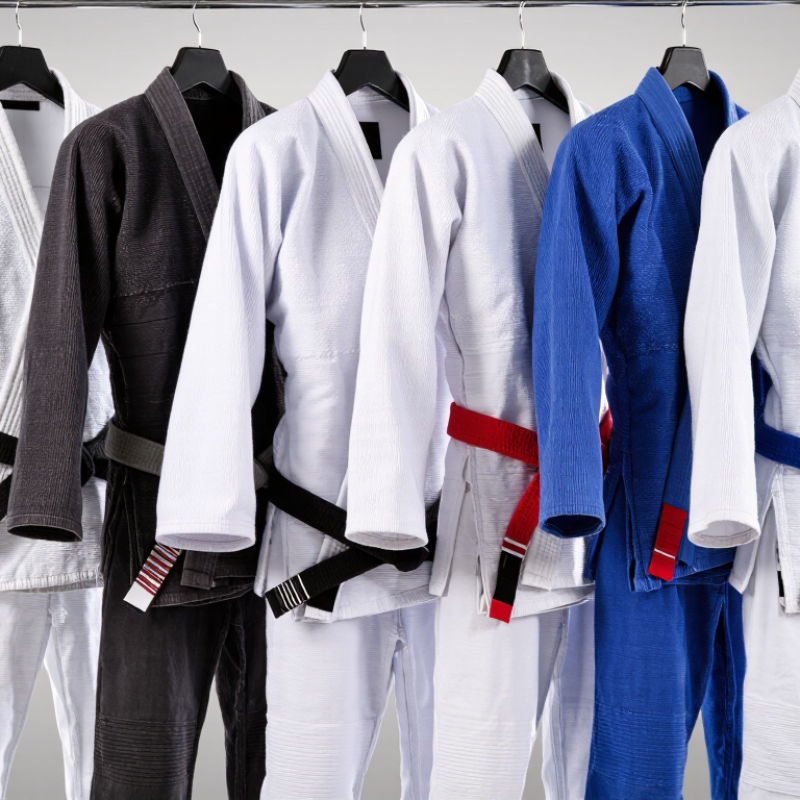
For an IBJJF competition gi, color is more than a style choice. The standard approved colors are white, royal blue, and black. A gi that looks navy under shop lighting may not appear clearly royal blue under inspection lights, so check it in daylight. Avoid relying on product photos alone.
Pay close attention to the lapel. IBJJF specifications call for a lapel width of 5 cm and a thickness of 1.3 cm. These measurements can be easy to overlook when choosing a gi online. At home, use a ruler to check the lapel across a flat section, then measure its thickness without squeezing the fabric. Small differences matter. A soft, broken-in lapel can feel thinner than a new one, and my own measuring is not always perfectly consistent. That is a reason to leave room for doubt.
Fit matters, too. Check the gi while wearing it, with your arms extended, and make sure the sleeves and jacket meet the event’s current requirements. Do not assume a familiar cut will pass every inspection. Tournament rules and procedures can change, so confirm the latest IBJJF guidance for your event. A quick check before packing is easier than discovering a problem at weigh-in.
These are brand-free competition gi profiles, not official IBJJF rankings. Fabric weave and garment weight are personal preferences; the gi itself must pass inspection.
| # | Competition Gi Profile | Gi Color | Lapel Width Limit | Lapel Thickness Limit | Inspection Focus |
|---|---|---|---|---|---|
| 1 | Lightweight single-weave style | White | Maximum 5 cm | Maximum 1.3 cm | Check the actual lapel measurements; weave type does not determine compliance. |
| 2 | Pearl-weave style | White | Maximum 5 cm | Maximum 1.3 cm | Confirm the jacket and pants are the same approved color. |
| 3 | Lightweight single-weave style | Royal blue | Maximum 5 cm | Maximum 1.3 cm | Use royal blue; avoid mixing the jacket and pants with another color. |
| 4 | Pearl-weave style | Royal blue | Maximum 5 cm | Maximum 1.3 cm | Check fit and sleeve length against the event’s gi inspection requirements. |
| 5 | Lightweight single-weave style | Black | Maximum 5 cm | Maximum 1.3 cm | Inspect for tears, alterations, or features that could prevent uniform approval. |
| 6 | Pearl-weave style | Black | Maximum 5 cm | Maximum 1.3 cm | Verify both lapel dimensions; a compliant fabric label is not a substitute for measurement. |
| 7 | Competition-cut gi in any permitted weave | White, royal blue, or black | Maximum 5 cm | Maximum 1.3 cm | Choose one permitted color and confirm the complete uniform meets the current event rules. |
IBJJF-approved gi colors are white, royal blue, and black. The listed lapel dimensions are maximum limits; check the current IBJJF rulebook and the event’s inspection procedures before competing.
White, royal blue, and black are standard approved colors. Check the gi in daylight; shop lighting can distort its shade.
The lapel should be 5 cm wide and 1.3 cm thick. Measure a flat section without squeezing the fabric.
No. A dark blue gi may look different under inspection lights. Check the actual fabric in daylight.
No. The 350–450 GSM and 450–550 GSM ranges are comparison guides, not official limits.
Measure the jacket and trousers before washing, then measure them again after laundering and air-drying. Compare results under the same wash conditions.
Extend your arms, squat deeply, and test a guard-retention movement. Check that sleeves and trousers remain within current event requirements.
No. A heavier gi may feel stable at the collar but restrict your shoulders. A lighter gi can feel freer, yet less substantial.
Inspect the color, lapel, fit, and patches against current event guidance. My ruler technique may vary. That uncertainty matters.
Choosing the right IBJJF Spec BJJ Gi Kimono means balancing rule compliance, a secure fit, durability, and value. This guide explains key inspection requirements, including approved gi colors, the minimum lapel width and thickness, and how the jacket, sleeves, and trousers should fit. It also shows what to check before competition so your gi meets the stated measurements without restricting movement or creating excess fabric.
The seven gis are compared by weave, fabric weight in GSM, expected shrinkage, mobility, reinforcement, and stitching quality. Rather than focusing on appearance alone, the rankings consider how consistently each option meets IBJJF specifications, holds up to regular training and competition use, and offers practical value. The result is a clear framework for finding a competition-ready gi that fits well, moves comfortably, and is less likely to fail inspection.